Perspectives in Practice: What We Heard About Well-Being, Connection & the Future of Work
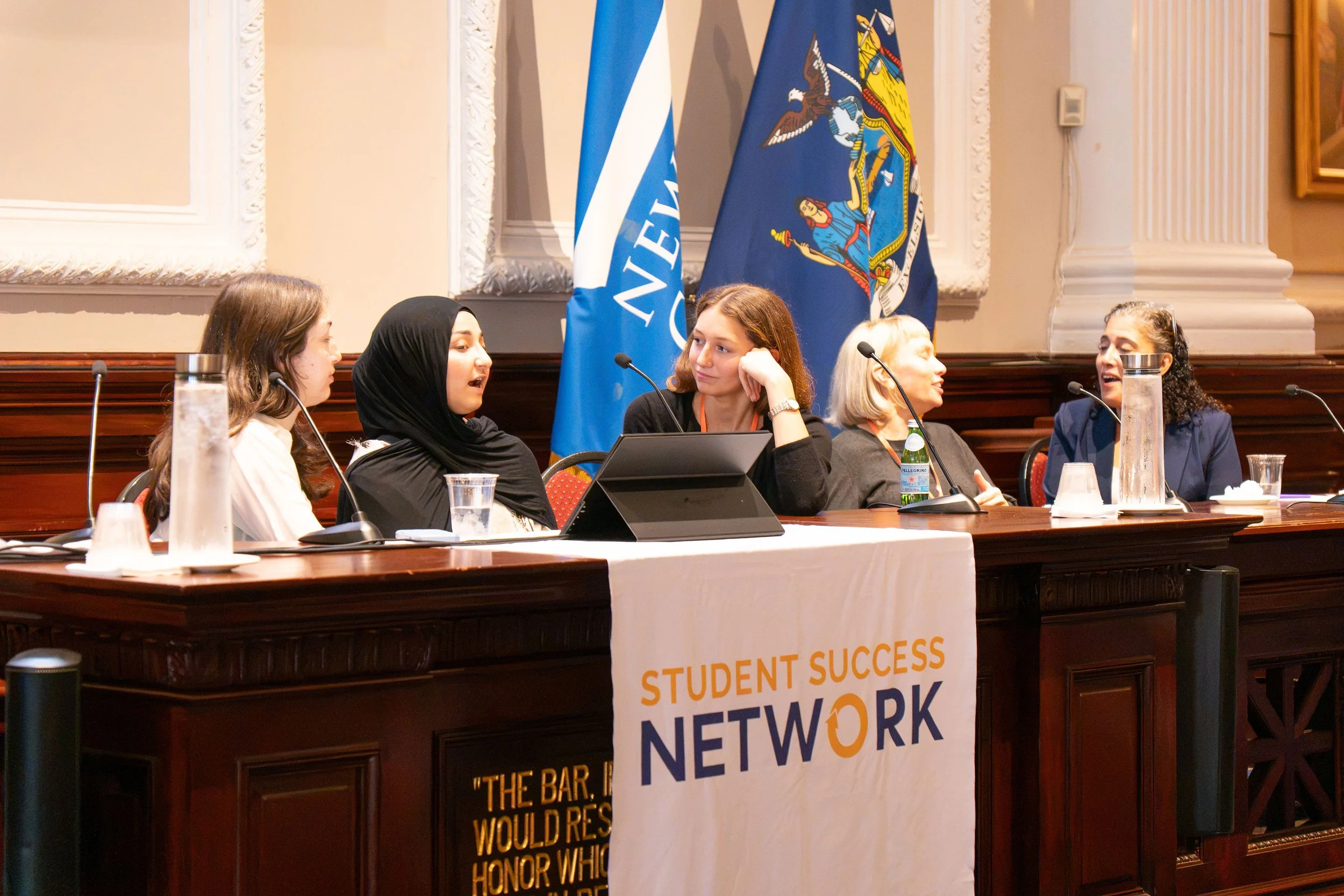
Perspectives in Practice: Well-Being, Connection & the Future of Work opened this year’s Expo as a community dialogue. Three organizations shared what they are seeing in their work with young people, and DYCD Commissioner, Sandra Escamilla-Davies, reflected on what it all means for those of us who lead and serve. Then, attendees turned to someone they had not met yet to talk it all through. Keep reading for insights from the morning session, and keep in mind that everything below represents a perspective from the field, not a prescription.
The 2026 Expo was built around an idea we return to often at SSN – the answer to almost any question is usually in the room.
So, we opened the day by putting some big questions before the room:
What is changing for young people, and how is it shaping their identity, well-being and hopes for the future?
How does our work need to evolve to support them?
The reality is that the world young people are preparing to enter is evolving faster than any of us can keep up with alone. They are growing up amid uncertainty about the future of work, unprecedented loneliness, and rapid technological advances. We put the value of this Network on display in our morning session by bringing together voices from across NYC’s youth-serving ecosystem to consider these challenges with the room, connect over common experiences, and share what we find works.
We welcomed perspectives from these organizations to the big stage:
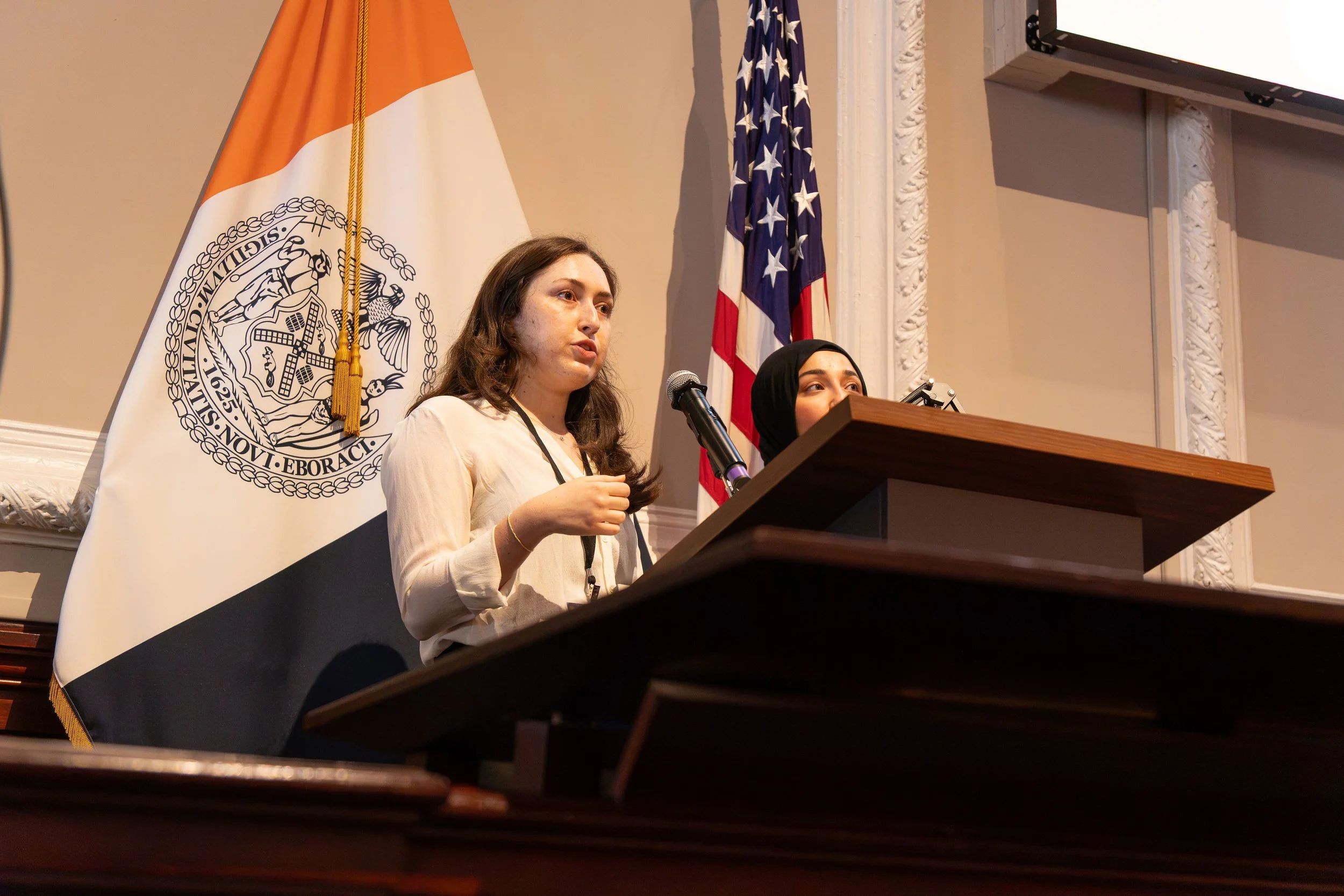
#DegreesNYC: Rachel Bork, Data & Research Coordinator, and Nermen Elkallini, Data Fellow
The Rithm Project: Abby Binder, Facilitator
Workforce Professionals Training Institute (WPTI): Andrea Vaghy, Chief Program Officer
NYC Department of Youth and Community Development (DYCD): Sandra Escamilla-Davies, Commissioner
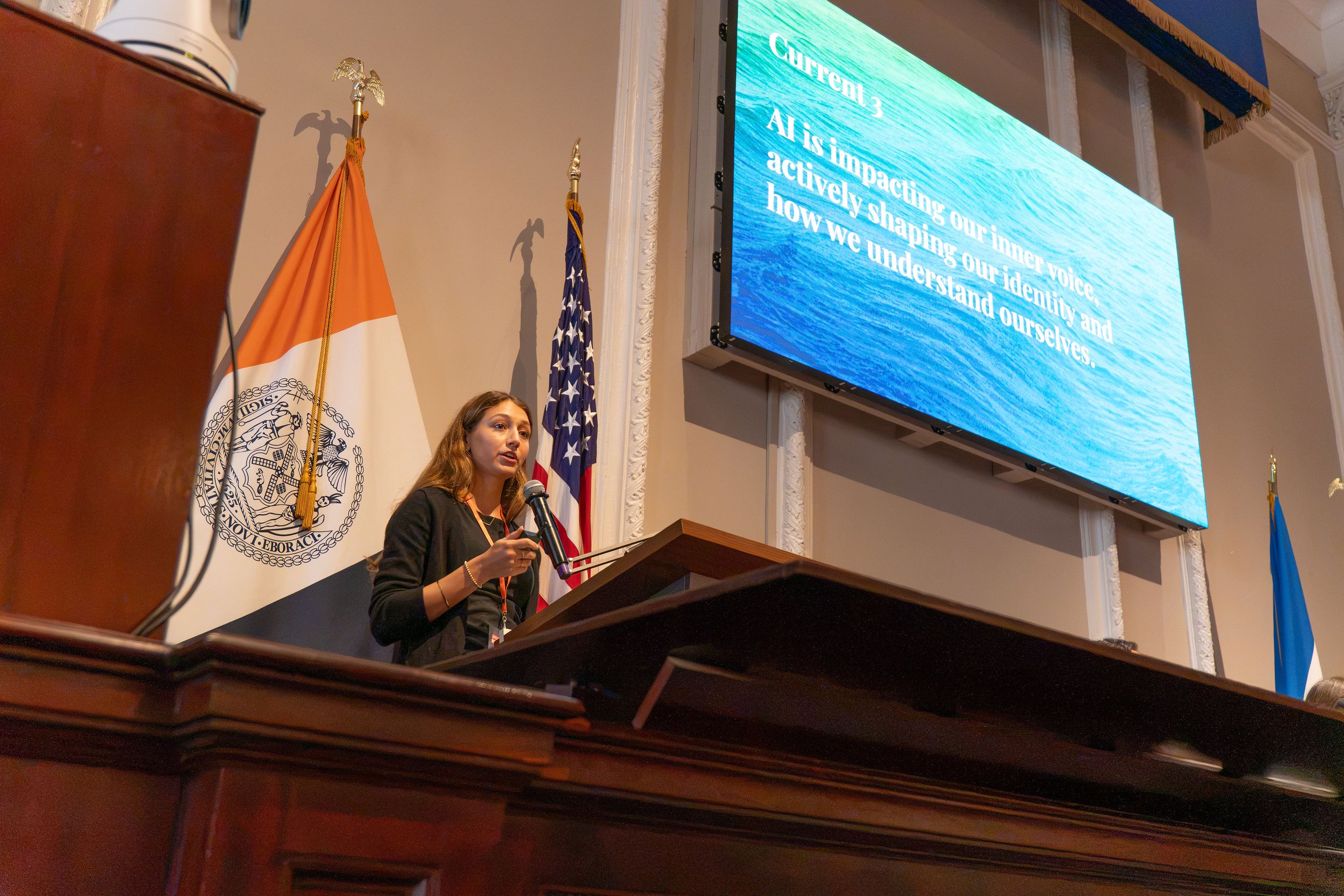
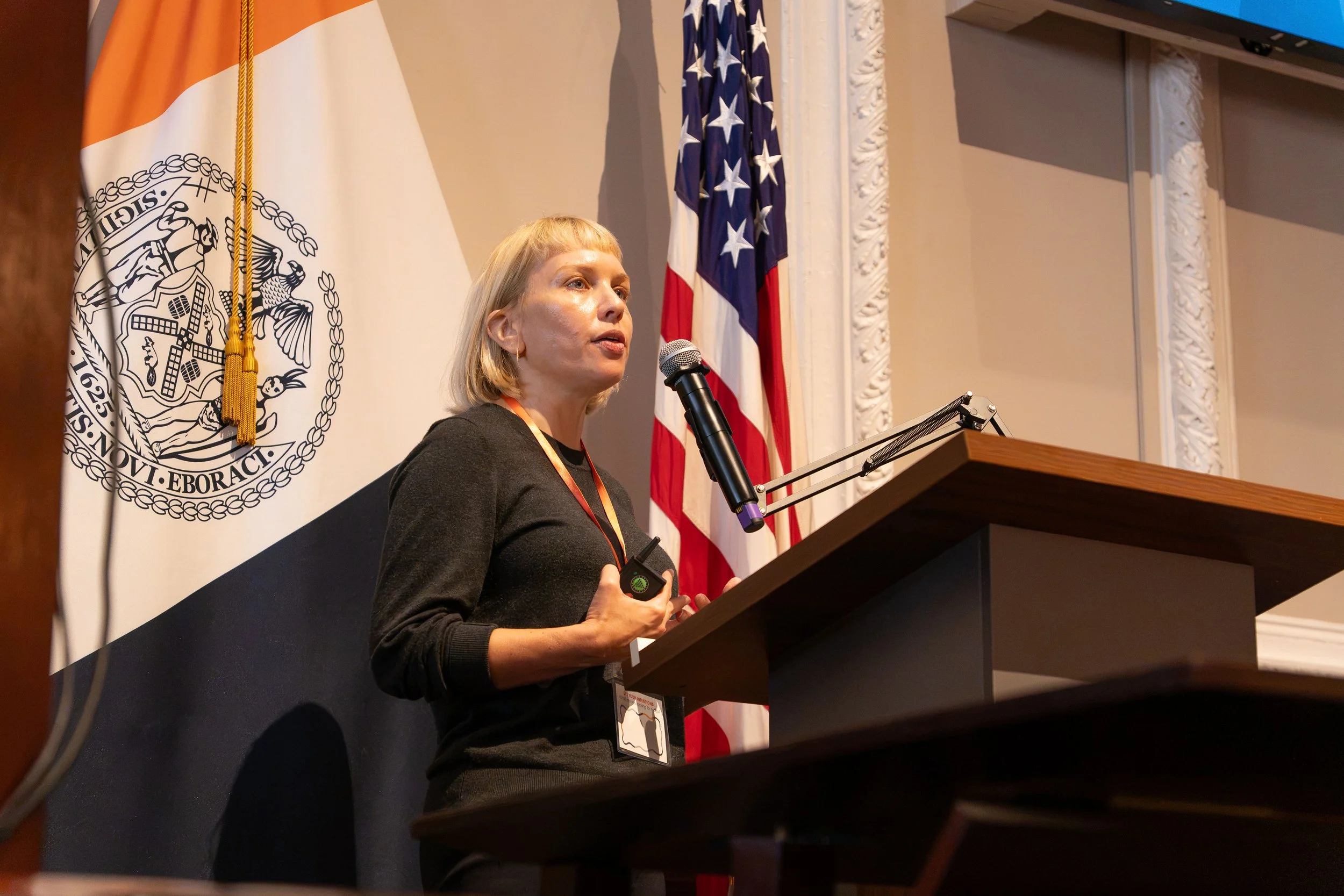
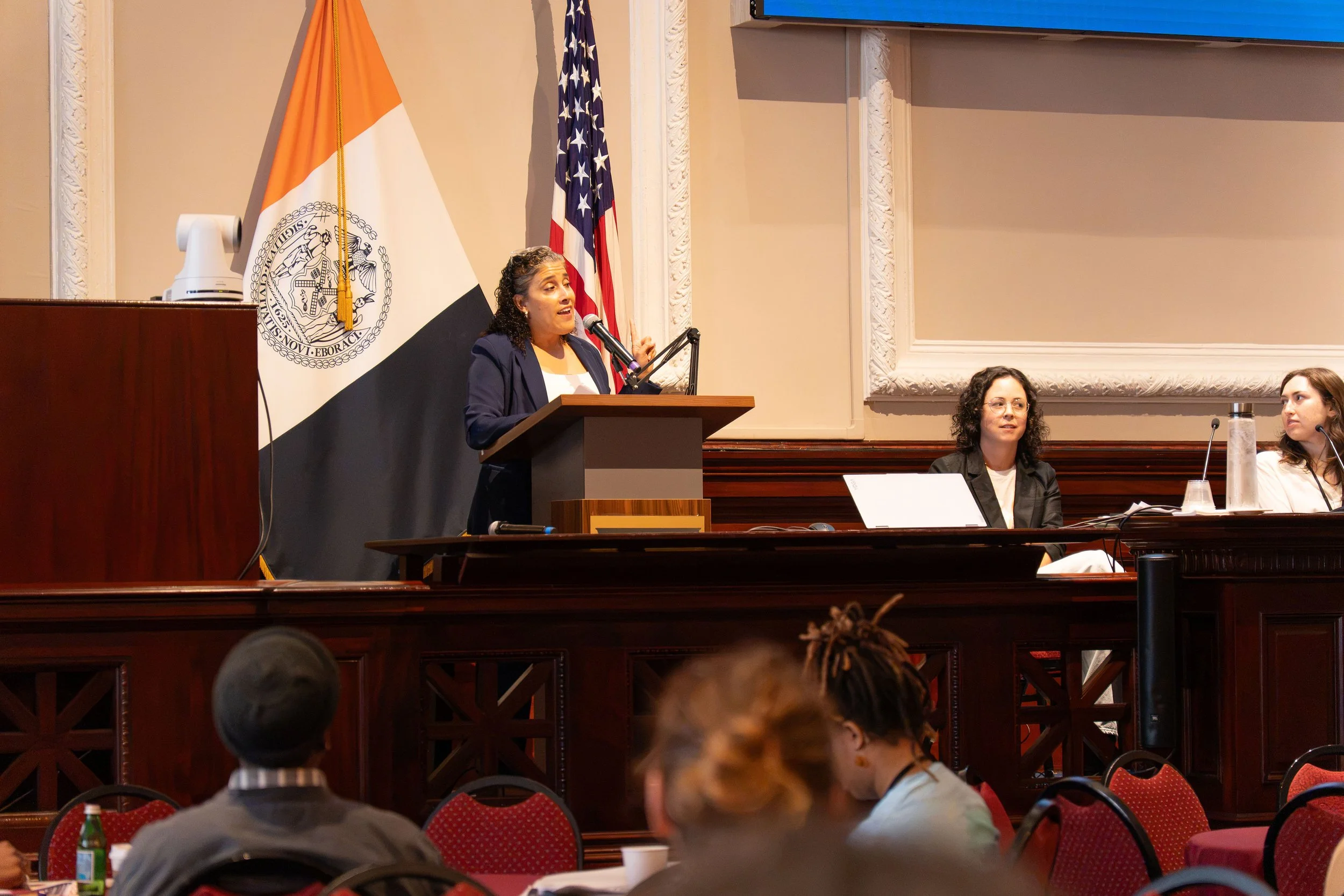
Below is a summary of what we heard and considered during our community dialogue.
What gets in the way of asking for help?
#DegreesNYC
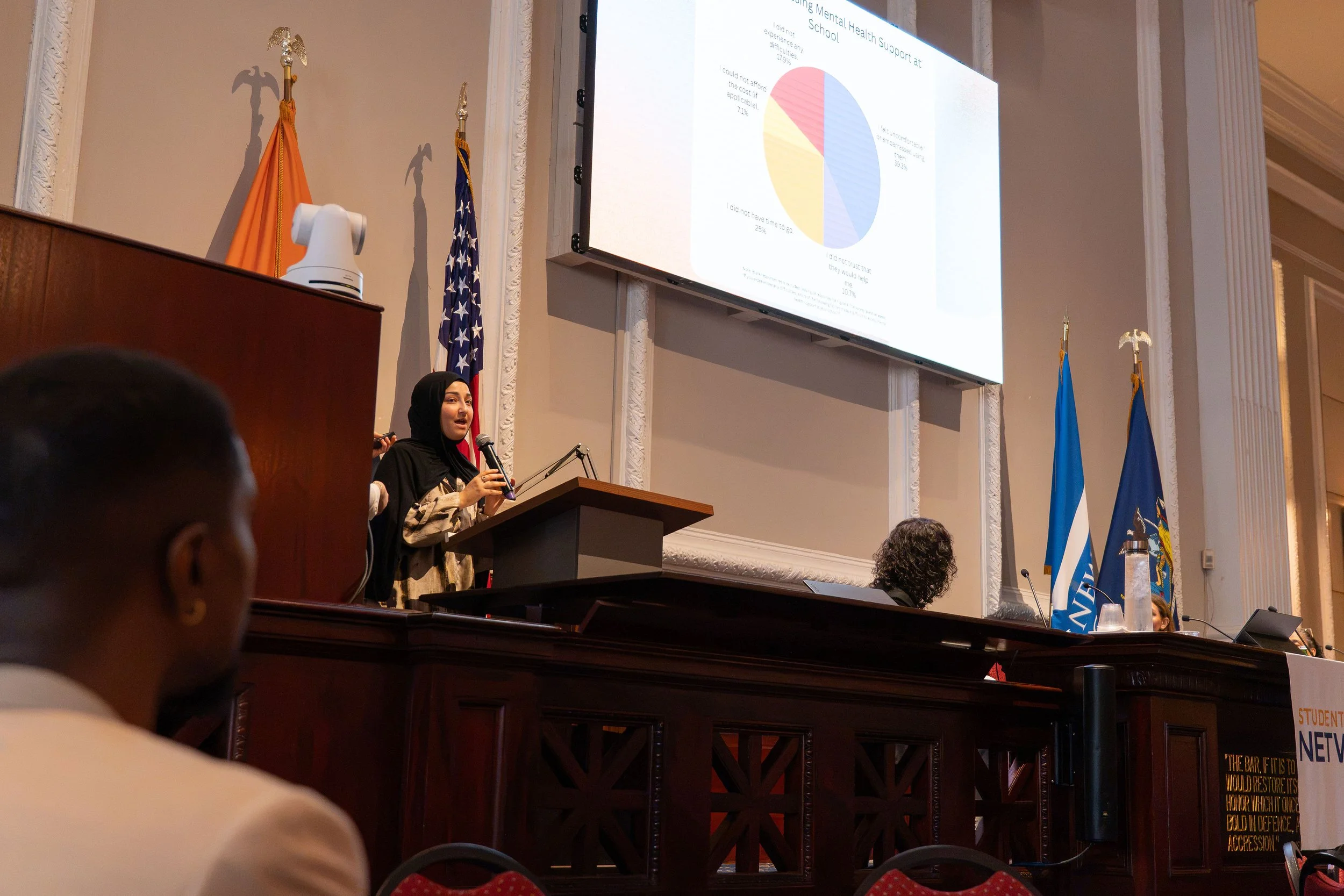
A 2024 #DegreesNYC Student-Ready Schools & Campuses Report found that 71% of students expressed a need for increased mental health support on campus. In a recent June 2026 report, a team from #DegreesNYC zoomed in on wellness and mental health to identify strengths and gaps in current practices and offer recommendations for making NYC schools and campuses more responsive to student needs.
Rachel and Nermen shared findings, and what stood out was why students did not always seek mental health support. While many knew where to find support, the most common barrier was feeling uncomfortable or embarrassed about using it (39.3% of students reported difficulty). Those feelings deterred more students than the time or cost of receiving support. In other words, the worry about being judged mattered more than the access.
The report’s recommendation points back to students themselves as an answer. As youth-serving adults, we can give students the opportunity to have a say in their school communities, including the kind of support they receive.
A note on the data: These findings come from one report, and the barriers question drew 28 responses.
#DegreesNYC is a data-informed collective impact movement, co-led by young people and education professionals, working to expand access to education across New York City.
What happens to connection when AI enters the picture?
The Rithm Project
Young adults are reporting twice the loneliness of senior citizens, and in an era where connection is seemingly more accessible than ever, our youth don’t appear to be experiencing it that way. While AI is everywhere, The Rithm Project’s data suggests that many youth are working through AI on their own: 61% of young people say their parents rarely or never talk to them about it, and 53% say the same of teachers.
The youth views Abby shared made this feel real. One 17-year-old described feeling behind because they were not using AI, and another 20-year-old described an intense shame around it because “everyone uses it secretly, and no one is talking about it”.
Abby offered a resonant image to explain the moment we’re in (– and we’re going to try to do it justice).
Picture a day at the beach. You wade in, and after a few minutes, you look up and realize you have drifted far from your umbrella on the shore.
Right now, we are drifting, whether we like it or not, because the sea itself is moving.
AI is a cultural change as much as a technological one. Rithm calls these forces "currents,” and Abby shared several of them with the room:
We are moving from building relationships through technology to having relationships with technology itself
AI is shifting the culture of what is real and authentic
AI is impacting our inner voice, actively shaping identity and how we understand ourselves
With youth in their formative years, asking big questions, such as, “Who am I?”, “What do I value?”, and “Where do I belong?”, we have to bring ourselves back to shore before we reach a point of no return.
Abby’s takeaway was to make this moment more “talkable” and less black and white by asking open-ended questions, listening actively without judging, and helping young people build discernment. Her closing was hopeful: We can shape the future we want to live in, but we have to build it together.
To go deeper, explore The Rithm Project’s Four Currents on their website.
The Rithm Project's mission is to build the intergenerational leadership force needed to reclaim and evolve human connection in the age of AI.
Interest in AI is ahead of confidence. So, where do we start?
WPTI
Andrea shared a bit about what WPTI has been noticing and learning through its work with the SUNY Manhattan Educational Opportunity Center (MEOC) YouthBuild program. In a survey of youth participants, 75% were not confident using AI for school, work or career tasks, and 75% were not confident identifying inaccurate AI information. Half said they were curious but simply did not know where to start.
WPTI’s perspective is that AI readiness needs a gradual path. They suggest the following when working with young people through career development:
-
Before asking a young person to use AI for a resume or career plan, understand where their starting point is first. For instance, can they navigate a document or write a professional email on their own?
-
It’s important that youth know how to spot inaccurate information, protect professional details, and decide whether a suggestion reflects what they intend. Staff can review an AI response with participants and ask: What would you check? What would you change?
-
Use job searching and interview preparation to practice AI tools while also strengthening communication skills and preserving their own voice. For instance, with staff coaching, a participant could draft a resume section, compare it with AI suggestions, and choose what to accept, reject, or rewrite.
Andrea left the room with a shared question: How can we give every young person guided AI practice within the programs they already attend? The recommendation was to plan for practice during program time, with a device option and an alternative when technology is unavailable.
A note on the data: These findings come from one organization's work with one group of students.
WPTI supports organizations that prepare jobseekers for meaningful work and careers.
What is this moment asking of us?
Reflection from DYCD Commissioner, Sandra Escamilla-Davies
Sandra spoke to leaders about their role during times of change. Sometimes, she said, you need to be a “shepherd of change” helping people leave something behind so they can step into something new. However, sometimes, you can be the best supervisor and still have folks who are not welcoming the change. In these cases, what do people need from us in order to move forward?
Sandra pointed to a particular framework that she often references herself, commonly known as the Knoster Model for Managing Complex Change. It names what needs to be in place: vision, skills, resources, motivation and an action plan. When one is missing, something predictable happens:
Without vision, confusion,
Without skills, anxiety,
Without resources, frustration,
Without motivation, resistance, and
Without a plan, false starts.
The reframe she offered is what stayed with many of us. When change is happening, our instinct is to locate the problem within a person (e.g. labeling them “resistant” or “not bought in”). Instead, using this framework pushes us to ask a different question: what might be missing, and how can we, as leaders, fill the gap?
Sandra reminded us that change is constant and is not unique to this moment, so adapting is naturally part of serving young people. Any change will meet resistance, and leaders can support it by looking at several things to understand the barriers. Most importantly, Sandra grounded us in the importance of doing this work with love. When we do so, we can embrace and support change, hold our colleagues and ourselves to high standards, and give our best in the service of young people.
TL;DR - The Breakdown of What We Heard
Several attendees named this community dialogue as the highlight of their day. A few themes stood out across the morning. Here are the key takeaways:
-
Fear of judgment kept students from using support (#DegreesNYC), AI use goes underground (The Rithm Project), and half of WPTI’s surveyed participants were curious about AI but did not know where to start.
-
WPTI described starting with comfort around digital basics before heavy AI use, and The Rithm Project described building discernment through conversation. #DegreesNYC’s findings also suggest that comfort, not only access, shaped whether young people reach for support.
-
The Rithm Project suggested asking open-ended questions and listening without judgment. WPTI suggested reviewing an AI response together. #DegreesNYC called for opening the door to give students a say.
-
The framework the Commissioner suggested applies to supporting young people and to leading our own organizations. We have to return to the question: What is this moment asking of us?
Your Turn
We believe the answers are already in this network: in the questions practitioners ask, in the data young people help gather, and in the conversations that happen when we make room for them. The Expo reminded us that no one has to figure this out alone. Just like in our community dialogue, we turn to you to reflect on your own perspective.
These are the prompts attendees took to their tables. How do they land for you?
What stuck with you most from what you read?
Where do you see this showing up in your own work?
What might this mean for how we support young people moving forward?
This blog was written by Senior Communications Manager, Jamiee Nathaniel.